You can now pre-order Xreal’s Aura Android XR glasses, here's how much they cost
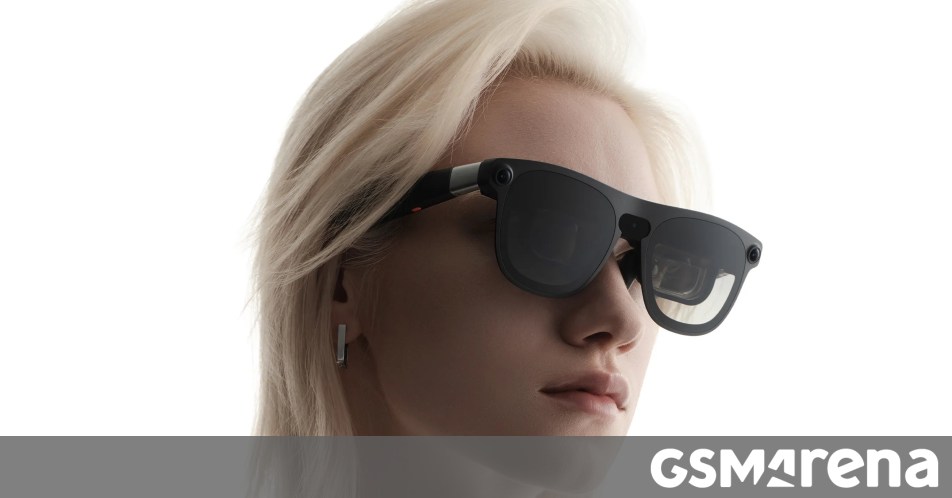
A New Chapter for Xreal: The Aura XR Glasses Move to Pre-Order
Xreal has officially transitioned its latest hardware venture from a reservation-based model to active pre-orders. Initially teased in June, the Xreal Aura Android XR glasses represent a significant departure from the company’s previous tethered display products, positioning itself as a standalone computing platform. While early adopters who secured their interest during the initial reservation phase are now receiving priority, the company has officially opened the gates for consumers in the United States, Canada, Japan, and South Korea to finalize their purchases.
This rollout strategy indicates a measured approach to market entry, with Xreal confirming that additional global regions will gain access to the pre-order window in the coming months. By moving into the standalone XR space, Xreal is attempting to bridge the gap between lightweight augmented reality wearables and fully functional mobile computing devices, a segment that has seen intense competition from both legacy tech giants and specialized startups.
Hardware Specifications and Pricing Tiers
The Xreal Aura is priced to compete in the premium wearable market, with two distinct configurations available to consumers. The entry-level model, priced at $1,279, comes equipped with 12GB of RAM and 256GB of internal storage. For power users who require more headroom for multitasking and local media storage, a $1,499 variant offers an upgrade to 16GB of RAM and 512GB of storage.
Under the hood, the device is powered by Qualcomm’s Snapdragon Reality Elite chip, a dedicated processor designed specifically to handle the intensive demands of spatial computing. The optical experience is anchored by dual Sony Micro-OLED panels, delivering a resolution of 1920x1200 per eye. With a 70-degree field of view and a 120Hz refresh rate, Xreal is aiming to provide a fluid, immersive visual experience that minimizes motion blur and enhances clarity for both static text and dynamic 3D content.
Balancing Form Factor and Functionality
One of the primary challenges in XR design is the trade-off between battery life, processing power, and physical weight. To keep the glasses themselves under the 95g threshold, Xreal has opted for a "puck" design. This external unit serves as the heart of the device, housing the 4,455 mAh battery, which helps distribute weight away from the user's face, potentially allowing for longer, more comfortable wear times. The puck also functions as the primary interface hub, featuring an integrated trackpad for navigation and a fingerprint sensor for secure, rapid authentication.
The display technology utilizes Optical See-Through (OST) architecture, which allows users to maintain a clear line of sight to their physical surroundings. To provide versatility, Xreal has integrated electrochromic dimming, enabling the user to adjust the opacity of the lenses. This allows the wearer to toggle between a transparent AR overlay and a fully dimmed, immersive VR-like experience, depending on their environment or the task at hand.
Software Integration and the Role of Gemini
Beyond the hardware, the Aura differentiates itself by running on a dedicated Android XR operating system. This software foundation is critical for the device’s utility, as it provides access to a familiar ecosystem of applications while leveraging spatial computing interfaces. A standout feature of the software suite is the integration of Google’s Gemini AI.
By baking Gemini directly into the XR experience, Xreal is betting that spatial computing will be driven by conversational AI. This integration suggests a future where users can interact with their environment through voice and intent, rather than relying solely on manual inputs. Whether for productivity, navigation, or real-time information retrieval, the presence of Gemini indicates that Xreal is positioning the Aura not just as a display peripheral, but as an intelligent, context-aware companion that understands the user’s physical surroundings.
Source: Written by the TechX team based on GSMArena reporting.

Post a Comment for "You can now pre-order Xreal’s Aura Android XR glasses, here's how much they cost"